
Data engine for physical AI

The data layer for physical AI.

Foundation models already understand the world. nablaX provides the missing action data that teaches robots how to act in it.

We record how the physical world responds when people handle it: what they look at, how they move, how much force they apply, what changes — and turn that into training data robotics teams can license.

Why now

Perception is no longer the bottleneck. Acting is.

There is no shortage of data about how the world looks. There is very little about what happens when you reach into it.

  1. Foundation models already understand the world

    Perception, language and reasoning are no longer the constraint. What is missing is the bridge from understanding to acting, and that bridge is made of data.

  2. The hardware finally exists

    Humanoids and capable manipulators are moving from lab demos to procurement decisions. Fleets are being ordered. Those fleets need training data that does not yet exist at the required quality.

  3. The gap is specific, not general

    Not "more data" — a particular kind: egocentric, gaze-aligned, hand-pose-accurate, tactile, with object state change labelled. Abundant for how the world looks; effectively absent for how it responds.

Machines that have felt the world, not only watched it. That is what nablaX builds the data for.

Everything that moves will be autonomous.
Jensen Huang, NVIDIA

What we deliver

Contact-rich data, collected and licensed to survive procurement.

We are building the data engine for that gap: contact-rich datasets for humanoids and robotic manipulation — collected, annotated and validated, as a licence, as a commissioned collection programme, or both. The first collections run against pilot clients' task specifications.

  • Licensable datasets

    Contact-rich multimodal datasets you can train on and licence commercially, with provenance attached to every capture.

  • Commissioned collection

    Continuous data collection captured to your task specification — your objects, your environments, your manipulation problem.

  • Quality assurance

    Annotation, validation and evaluation designed to answer one question: did the data move your model, and how do you know?

  • Consent and licensing

    Consented capture, privacy-preserving by construction, audit-ready provenance — built for a procurement review, not retrofitted to one.

What is in a capture

Egocentric video
the world from the actor's point of view
Eye tracking
where attention goes before the hand moves
Hand pose (IMU-based)
accurate, not inferred from pixels
Tactile contact signals
force and contact, not just geometry
Object state-change annotations
what actually changed, and when
Intent annotations
what the actor was trying to do, not only what moved
Generic video datasets compared with nablaX captures
CriterionGeneric video datasetsnablaX
SignalHow the world looksHow it feels and changes through interaction
ProvenanceScraped, unclear provenanceConsented, privacy-preserving, audit-ready
MetricVolume as the metricSignal density as the metric
LicensingResearch-grade licensing ambiguityEnterprise-licensable by construction
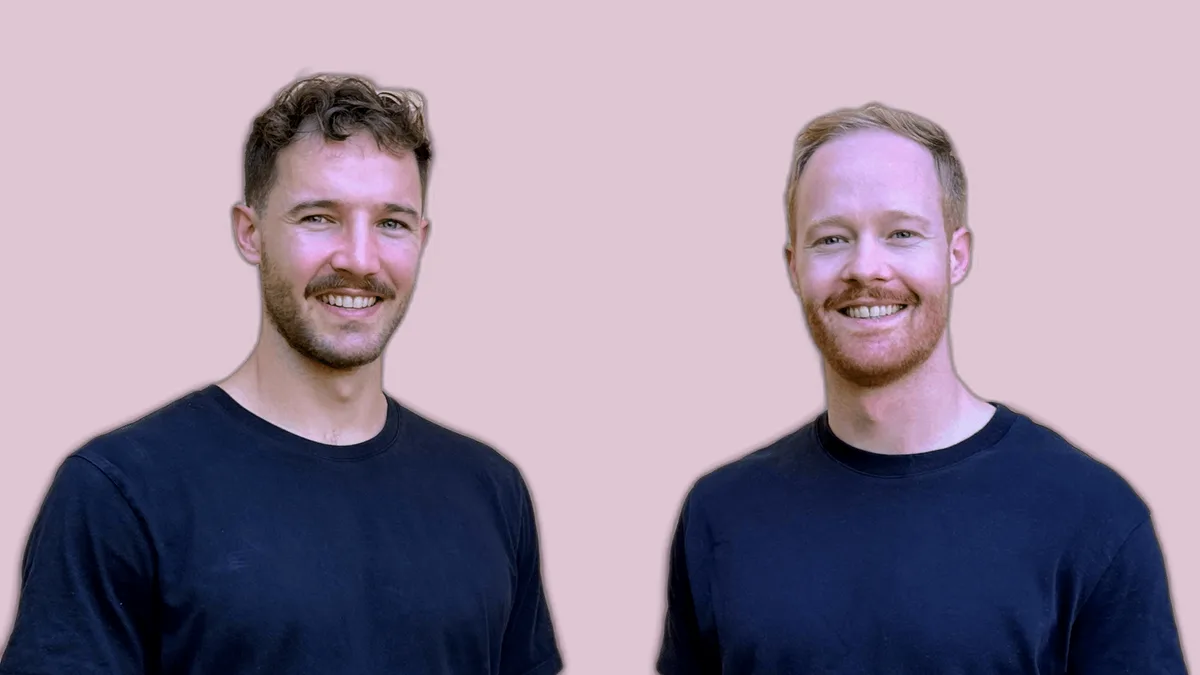
Julian and Marius Koechlin, standing side by side against a plastered wall

Team

As twin brothers, we have always enjoyed building and competing together. One of those competitions was the robo.innovate hackathon at TUM, where our eleven-person team won with GrowBot, a tree-care robot.

What stuck with us was a technical insight: perception is only half the problem. The real challenge is enabling robots to interact with the real world precisely and reliably. nablaX was created to solve exactly that challenge.

Julian Koechlin

Julian Koechlin

Co-founder, M.Sc. in Nanophysics

After studying physics, 5 years of building Data & AI systems professionally and building robots as a side obsession, I realized I wasn't pursuing three separate interests. I was building toward nablaX. I am excited to build at the intersection of intelligence and automation and help shape the future.
Marius Koechlin

Marius Koechlin

Co-founder, Ph.D. in Economics

I have spent a lot of time analysing how economies respond to change. Robots that can reliably operate in the physical world will be extremely transformative. I'm very excited to work on building that future and contribute to making it a reality.

Currently open to

Four conversations we are actively looking for.

  • Founding team

    We are adding robotics depth to the founding team — as a co-founder or as an advisor. Production robotics or perception experience.

    Introduce yourself
  • Pilot clients

    Robotics teams with a manipulation problem and no data for it. We will collect against your task specification.

    Describe your task
  • Data partnerships

    Organisations with access to real work environments where contact-rich capture is possible.

    Tell us about your site
  • Hiring

    Not yet formally. We still want to meet people who would want to build this.

    Say hello

Tell us what you are trying to teach a robot to do.